Wednesday, March 23, 2011

Wilson's Fourteen Point


During the negotiation of the Treaty of Versailles, US President Woodrow Wilson proposed his idea of the Fourteen Points to create a just and lasting peace. Among them are:
  • An ending to secret treaties-This exists today, in that we have learned from the idea that leaving people out of negotiations creates hostility. (Does World War II ring any bells?)
  • Freedom of navigation on the seas- This still remains today. Outside of territorial waters, the seas are free for anyone to sail on.
  • Reduction of national armies- This doesn't really exist today, because we have a large army, as do a lot of nations. It is hard to keep this under control. (Again, Nazi Germany was supposed to be limited, but we all see how well that worked out...)
  • League of Nations- This was a peace-keeping organization for nations around the world. This does not exist anymore, but the United Nations does, which is probably even more beneficial for today's world, as opposed to the smaller League of Nations. 
I think that the most effective of the four points that I discussed is the League of Nations. Although this no longer exists, it led to the development of the United Nations, which I believe is an effective and beneficial organization. 

Political Cartoon

This cartoonist is trying to represent the silliness of the promises made by the Zimmerman Note. Zimmerman, in a typical helmet worn by German officers, is whispering to the Mexican man, wearing the sombrero. This is certainly stereo-typing the Mexican people as silly, Sombrero-wearing people. It seems ridiculous that Zimmerman is whispering, AND holding the sign up, because it shows that it wasn't really that secret.
I like this cartoon, and I think that the cartoonist is representing the situation well.

American Women during WWI

During the first World War, American women served new roles. American women, of course, filled in for their husbands, and other men on the home front. The women took over the jobs that had previously only been held by men. This  caused them to be more active in the community, and also pressed the issue of womens' suffrage more than before.
Women, however, did not just step up and fill in the gaps. Loretta Perfectus Walsh served as the first woman allowed to serve (as a woman) in the United States Armed Forces. She served in the war, not as a nurse, but as an member of the active duty servicemen (and women). This opened many doors for women, as along with this, they received the same benefits as men, and identical pay.
World War I seemed to place women on the same level as men, and it was clear that they never wished to return to that sub-level that they had been on for so long previous to this.

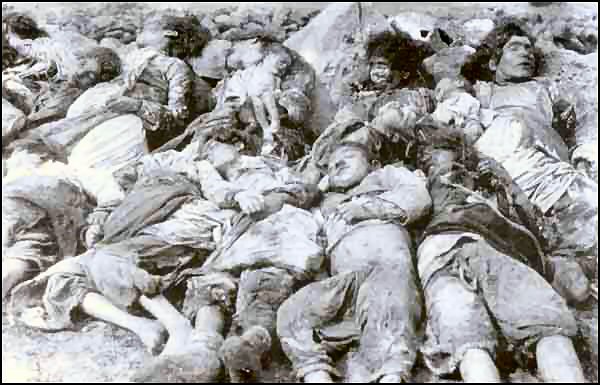
Armenian Genocide

The Armenian Genocide was the systematic killing of the Armenian population during and after World War I. It is thought that between one and one and a half million people were killed during this time period. The Armenian people were Christians, and they were a minority in the area, and considered second class. The Armenians were discriminated against greatly leading up to the genocide. The genocide consisted of the systematic killing of many of these people, including marches to the deserts of today's Syria, and neglecting to give the Armenian people food and drink.
I believe that the Armenian Genocide was a terrible thing, and that it is unfair to systematically kill people based on their beliefs, or their race. It was wrong when Hitler did it, and it was certainly wrong when the Turks did it.